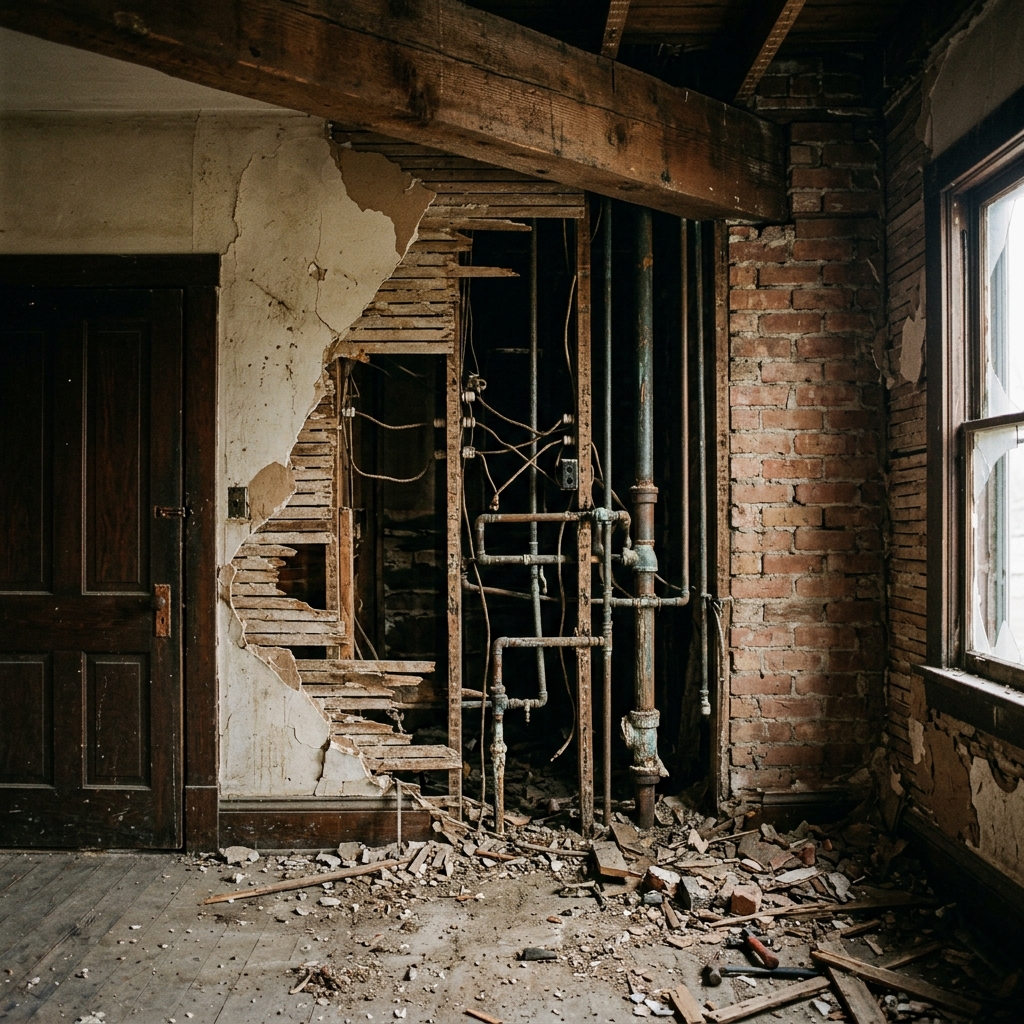
Demolition Day is when the truth about older homes is revealed. The tiles come off. The wall comes down. After 60 years of hiding, it all becomes visible. For homeowners wanting bathroom remodeling in Salt Lake City, this is where the budget goes through the most revisions, unless you know what you are in for before the first hammer goes through the wall.
Why Salt Lake City Homes Have So Much to Hide
Between 1940 and 1970, around 8,358 homes were built in Utah. From the Sugar House bungalows to the ramblers built after the war, these homes would have significantly different amenities and infrastructure than we are accustomed to today. Salt Lake City homeowners wanting to remodel their bathrooms are missing budget markers by 20-30% because the worst of these problems tend to be behind the walls and invisible to the homeowner until demolition begins.
What to Expect Behind the Walls?
Homes built before the 1970s tend to have galvanized steel pipes. Homes built with steel tend to experience a gradual decline in water pressure, turn brown and rusty, and begin leaking. Homes in Utah tend to be hard on plumbing due to the water’s mineral content.
When a demo shows galvanized supply lines, replacing them with PEX or copper typically costs $2,000 to $8,000 for an average two-bathroom home, plus more for replacing failing drain lines. While it may be convenient to replace only the exposed lines, corrosion affects the supply lines as a whole, and repairs to a line often lead to new leaks forming nearby. Any contractor who does bathroom remodeling in Salt Lake City will say the same: if you can access the supply lines, you should replace as many as possible.
Wiring That Predates the Modern Bathroom
Homes built prior to 1950 likely have knob-and-tube wiring, which is ungrounded and insulated with cloth and rubber that have aged and are prohibited from touching the insulation. Homes built in the 1960s and 70s usually have aluminum branch wiring, which is a documented fire risk. Those wiring types can’t safely handle a modern bathroom with GFCI outlets, heated floors, exhaust fans, and high-wattage lights.
The cost to rewire the bathroom only is $1,500 to $4,000, and if the panel needs to be upgraded, a service upgrade, which costs an additional $2,000 to $4,000, will be required. Many insurance companies are imposing steep surcharges on homes with knob-and-tube wiring or refusing to cover them at all, which is why many homeowners in Utah are remodeling bathrooms to address this issue.
Water Damage You Can’t See
Utah’s dry climate leads to slow, undetectable leaks. The moisture in the area evaporates, allowing leaks to occur without leaving stains on the surface. Demolition is often necessary to identify rotted subfloors, moisture-damaged tub surround framing, and mold in wall cavities. It can become very costly due to structural repairs and mold remediation. Insurance rarely covers damage caused by long-term neglect.
Permits and Code Upgrades
Whenever you open a wall, building inspectors expect you to bring it up to code. Codes may require shutoff valves and ducts, GFCI outlets, and exhaust fans. Permits for bathroom remodeling in Salt Lake City range from $400 to $1,200, depending on the town. If permits aren’t pulled, the baths will fail inspection, and insurance will not cover claims at resale.
How to Keep the Money in Your Wallet
Surprise repairs are usually costlier than expected, and that is even more true in older homes. A few tips when planning bathroom remodeling in Salt Lake City:
- Get inspections before you start tearing down walls. A few hundred dollars now is worth it, so you don’t find out the hard way by having to shell out thousands.
- Expect the unexpected. For renovations to homes over 40 years old, budget at least 15% to 20% of the total renovation costs for unknown issues.
- Get it done now. It’s always cheaper to get repairs now rather than later. With renovations, you’ll want to repair anything that is not up to code now instead of getting hit with the charge twice.
- Hire a contractor who knows Salt Lake City. You need to hire a local contractor to know how codes and issues in different Utah neighborhoods will be interpreted by inspectors.
The Bottom Line
While these costs can be a shock, remodeling also offers an opportunity to replace old infrastructure with new, valuable systems. Replacing systems that pose potential water or fire risks also reduces insurance costs and increases the home’s value. The remodeling also gives Utah homeowners a chance to finally give their homes the modern upgrades they have most definitely needed.